Five Engines That Changed Spaceflight
Е. Быкова11 July 202611 min read
The RD-107, NK-33, RD-170 and two more — each solved a problem previously considered unsolvable.
The history of rocketry is largely a history of engines. A rocket is tanks, structure and payload; everything else is decided by what sits at the bottom.
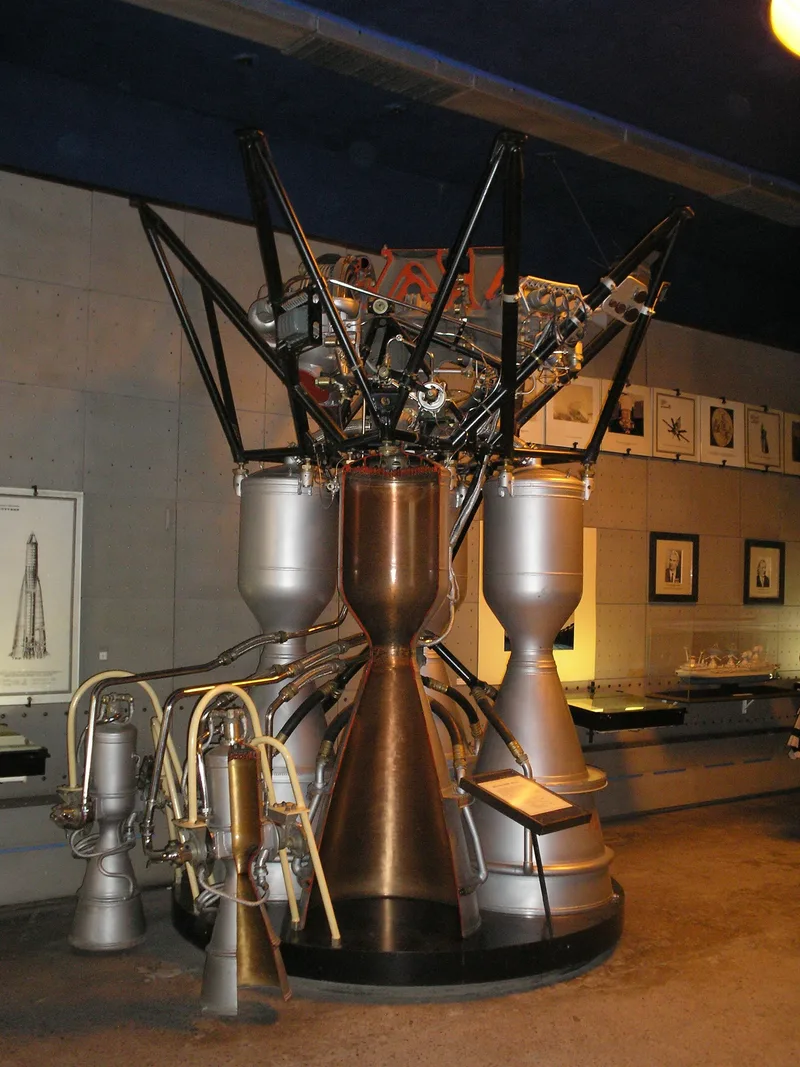
The RD-107 solved combustion instability. By the mid-fifties it was clear that a chamber of the required thrust entered high-frequency oscillation and destroyed itself. Valentin Glushko split it into four smaller chambers sharing a turbopump. The solution looked like a compromise but became a school: the four-chamber packet layout shaped Soviet rocketry for half a century.
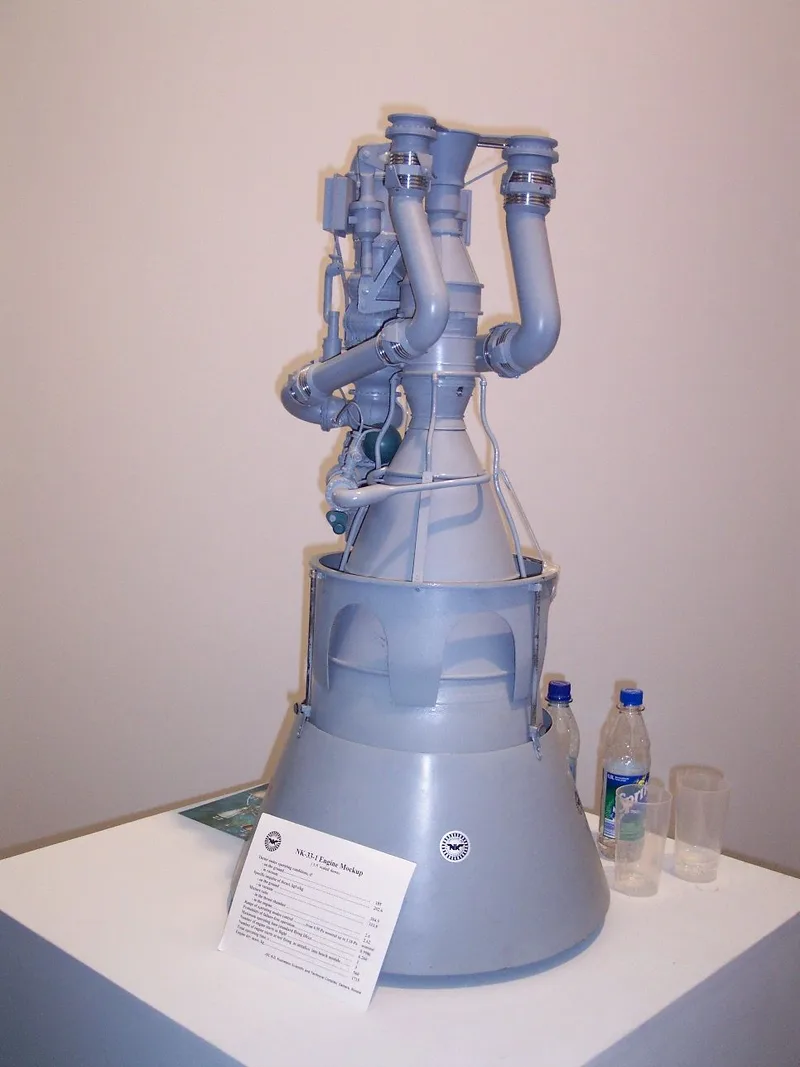
The NK-33 solved mass. The first stage of the lunar N-1 needed thirty engines at once, and every extra kilogram was multiplied by thirty. Nikolai Kuznetsov chose staged combustion and achieved a thrust-to-weight ratio of about 136 — a figure that seemed unreachable in the early seventies. The lunar programme closed, but the engines outlived it by twenty years and flew on American launchers.
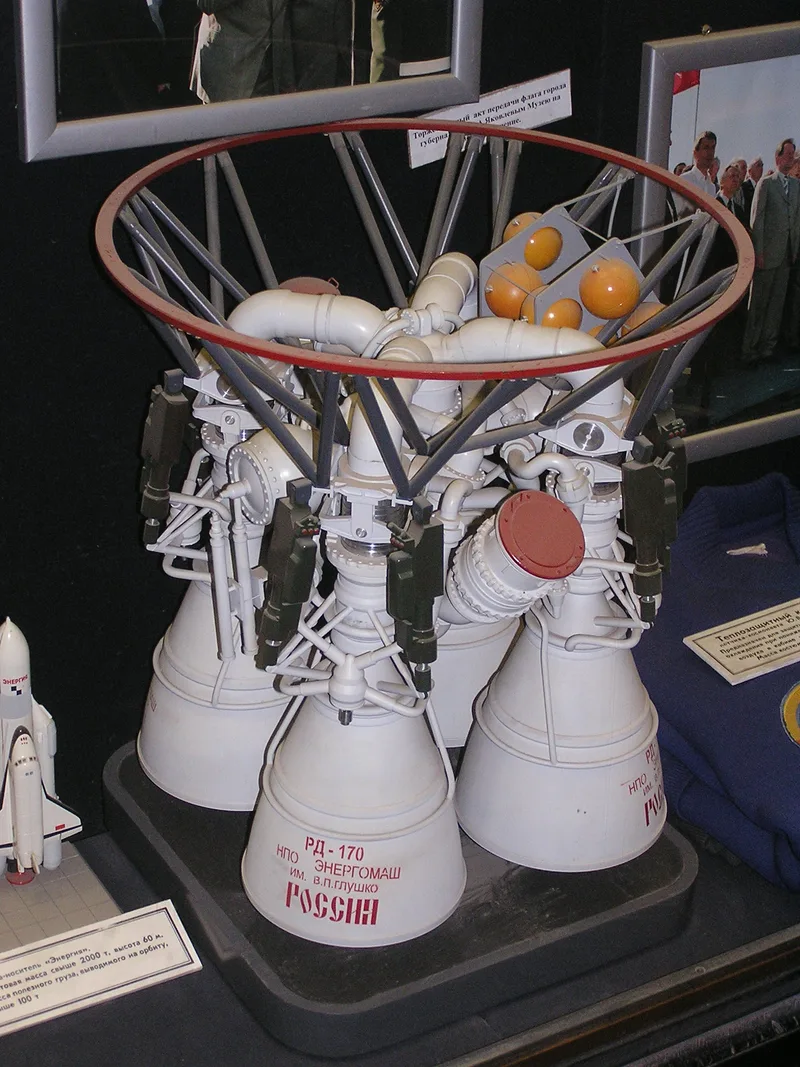
The RD-170 solved scale. The engine for the Energia boosters develops 7.9 meganewtons — a record still unbeaten. A single 190-megawatt turbopump feeds four chambers; that is comparable to a small power-station unit working in a volume you can walk around in ten paces.
The RD-0110 solved ignition in vacuum. The third-stage engine lights at about 170 kilometres, in vacuum and weightlessness, where there is neither atmospheric pressure to stabilise combustion nor gravity to settle propellants at the pumps. A failure here loses the entire mission — and in sixty years of service this engine has become one of the statistically most reliable in the world.
The VK-1 solved the first step. Its parameters were not outstanding, but on it the country mastered turbojet technology: heat-resistant alloys, rotor balancing, the manufacturing culture of turbine blades. Without that school neither the AL-31F nor the RD-33 would exist.
All five engines stand in the museum's engine hall. It is worth examining them in sequence: you can see how one engineering problem gives birth to the next.