Why the Tu-144 Was Ahead of Its Time
А. Фёдорова13 أغسطس 2026قراءة في 9 دقيقة
The world's first supersonic airliner flew two months before Concorde — and left the routes before it too.
On 31 December 1968 the Tu-144 took off from an airfield near Moscow. Concorde's first flight was two months away, and the Soviet Union won that race. But the date won turned out to be the only point on which the aircraft unequivocally beat its rival.
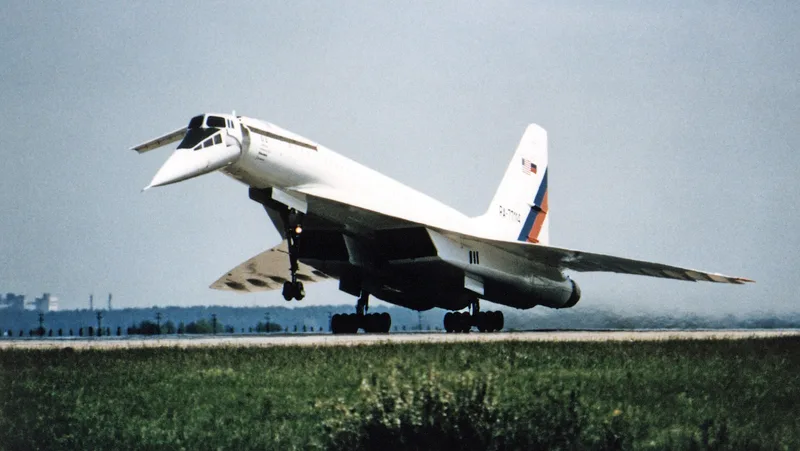
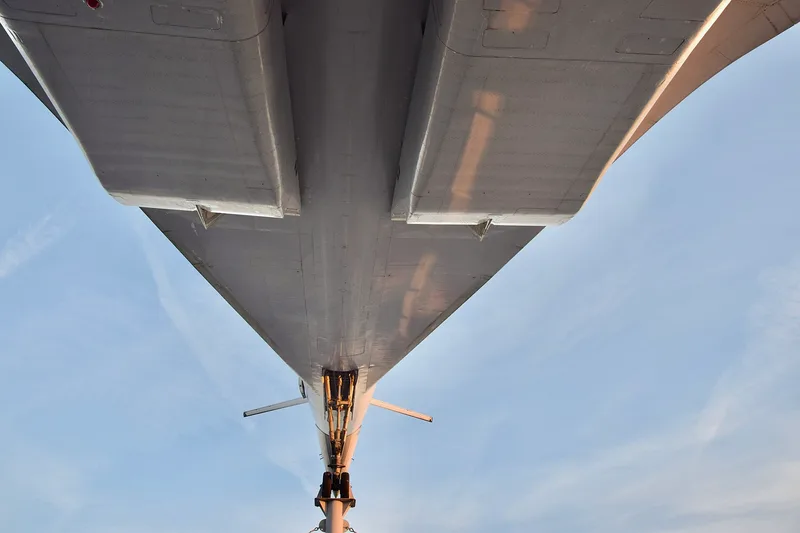
The aerodynamics of the Tu-144 were brilliantly resolved. The ogival variable-sweep wing gave acceptable performance both supersonically and on approach, while the retractable canard — the "moustache" — solved the eternal problem of supersonic aircraft: insufficient lift at low speed. No other airliner had such a solution.
The problem was the engine. The NK-144 was derived from a strategic bomber powerplant and kept an afterburner that ran continuously in supersonic cruise. Fuel consumption grew so much that the design range proved unreachable: a refuelling stop was required. Noise and vibration in the cabin were such that passengers passed notes instead of talking.
Re-engining with non-afterburning RD-36-51A units answered the economy question — the Tu-144D variant did fly further and quieter. But by then the programme was being wound down: after the Le Bourget crash of 1973 and the accident near Yegoryevsk in 1978, passenger service ended after just 55 flights.
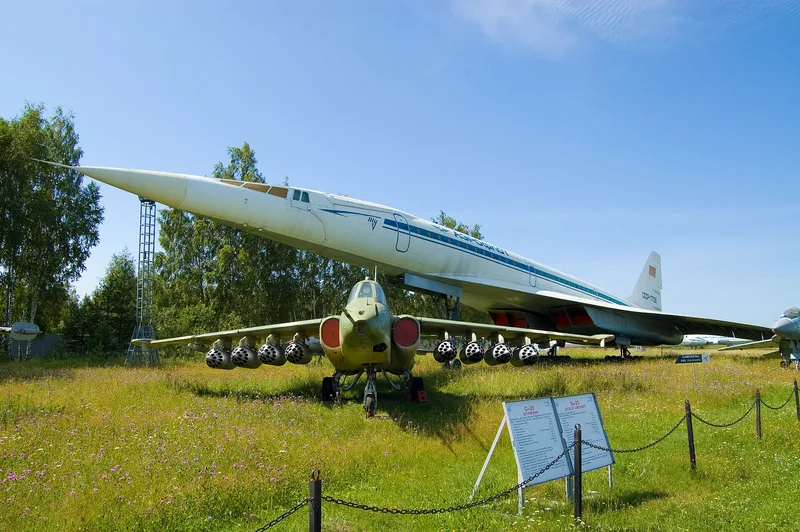
In the museum the Tu-144 stands beside an NK-144 — the aircraft and its engine deliberately shown together. It is the clearest example in the collection that an aircraft is never better than its powerplant, however perfect the wing.